LoRa P2P Secure Hub: nRF54L15 Sender + ESP32-S3 Receiver
Full-stack LoRa P2P system: nRF54L15 sender node with Zephyr RTOS transmits AES-128-CTR encrypted IMU data every 5s to an ESP32-S3 receiver hub with live WebUI and CSV logging.
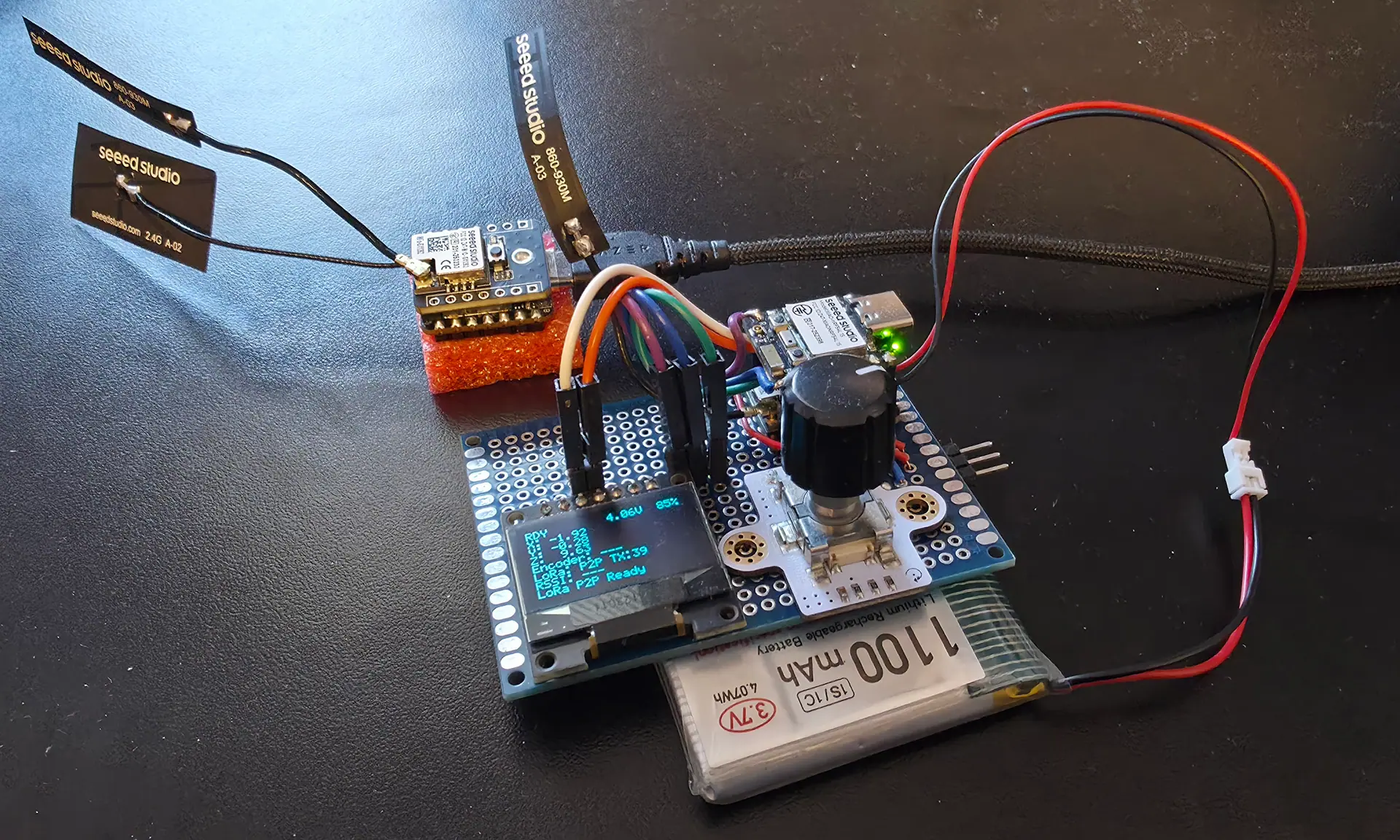
A production-grade wireless vibration monitoring system ,no gateway, no cloud subscription, 300m+ range. The nRF54L15 acts as a battery-powered sensor node that transmits encrypted IMU readings every 5 seconds. An ESP32-S3 hub receives, decrypts, and serves a live WebUI over WiFi.
The Problem It Solves
Existing vibration monitoring solutions typically fall into one of two camps: expensive cloud-connected industrial sensors, or simple Bluetooth loggers with a 10m range. Neither fits the scenario of a mid-range installation: A warehouse, machine room, or outdoor plant, where you need 100–300m of reliable wireless coverage without monthly SaaS fees or a LoRaWAN gateway on site.
This system targets exactly that gap: encrypted, battery-powered, self-hosted, deployable in an afternoon.
System Architecture
┌─────────────────────────┐        868.1 MHz SF9        ┌──────────────────────────┐
│  nRF54L15 + Wio-SX1262  │  ──── AES-128-CTR ────►    │  ESP32-S3 + SX1262       │
│  Sender Node            │        BW125 / every 5s     │  Receiver Hub            │
│  Zephyr RTOS            │                             │  Arduino / RadioLib      │
│  IMU → encrypt → TX     │                             │  decrypt → log → WebUI   │
└─────────────────────────┘                             └──────────────────────────┘
         LiPo battery                                        WiFi → http://lora.local
Why P2P instead of LoRaWAN?
LoRaWAN adds infrastructure complexity: gateways, network server, join procedures, duty cycle restrictions. For a closed system-sensor to base station in a building, warehouse, or outdoor installation: P2P is simpler, faster, and fully under your control.
| Feature | LoRaWAN | P2P |
|---|---|---|
| Range | km (gateway dependent) | 300m, 2km (direct) |
| Latency | 1–2s (Class A) | <1s |
| Infrastructure | Gateway + NS required | None |
| Duty cycle | Restricted (1% EU868) | Your responsibility |
| Complexity | High | Low |
Sender Node: nRF54L15 + Wio-SX1262
Hardware Platform
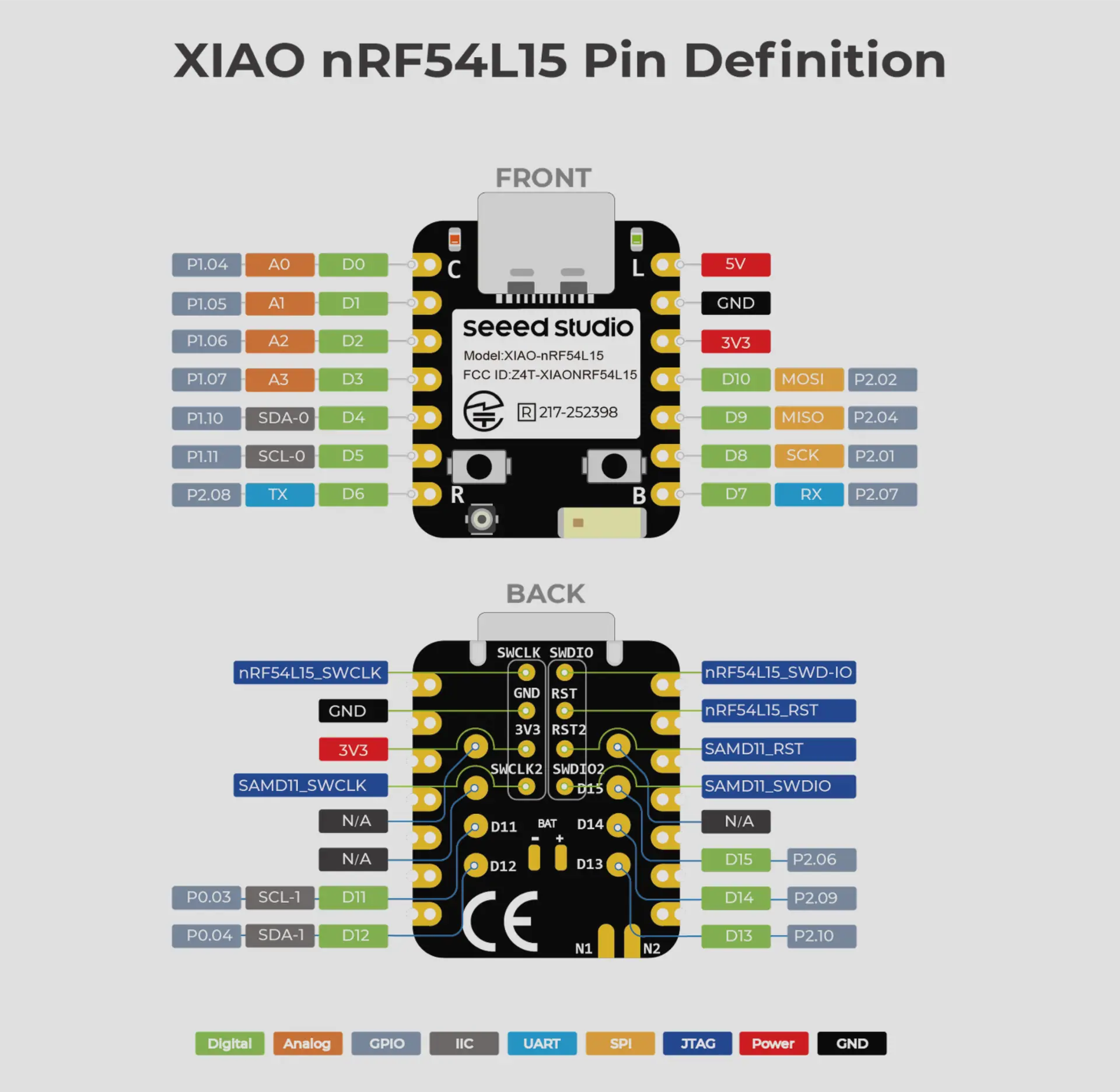
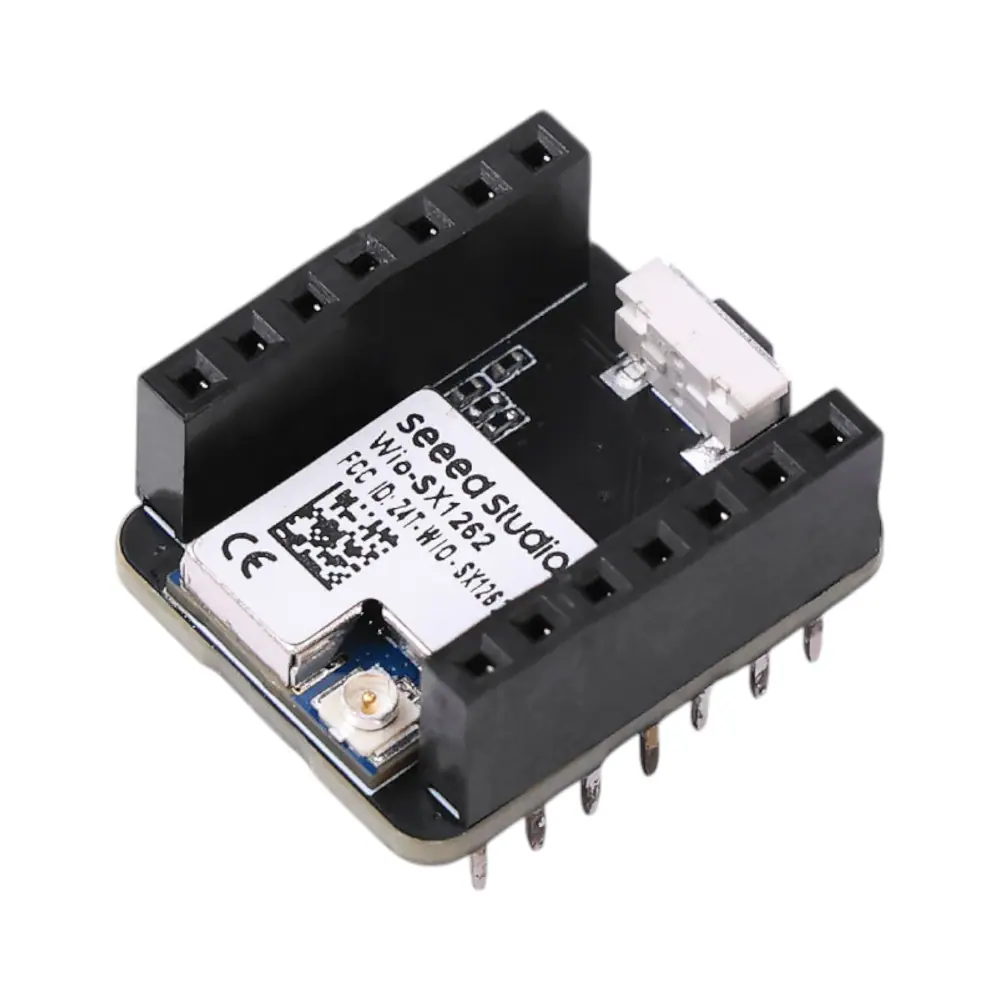
The sender is built on two stacked Seeed Studio modules:
- XIAO nRF54L15 with Cortex-M33, 1.5 MB Flash, 256 KB RAM, ultra-low power
- Wio-SX1262 Semtech LoRa shield that plugs directly onto the XIAO header, SX1262 transceiver with onboard TCXO and antenna
Why These Components?
The SX1262 was chosen over the older SX1276 for its lower power consumption in receive mode and native support for duty-cycle management in hardware. The TCXO on the Wio-SX1262 eliminates frequency drift at temperature extremes, important for outdoor deployments.
The nRF54L15 runs Zephyr RTOS, which gives access to a mature power management subsystem. The onboard DC/DC buck converter (rather than an LDO) improves efficiency from LiPo voltage down to the system rail, making a meaningful difference in battery runtime when the radio is active multiple times per minute.
What It Measures
The sensor node reads 3-axis acceleration from an LSM6DS3TR-C IMU at 104 Hz. In addition, a PDM microphone feeds a 32-band FFT for vibration frequency characterization, useful for detecting bearing wear or imbalance patterns in rotating machinery.
A 128×64 OLED and rotary encoder provide local status display and threshold configuration without needing a laptop or phone in the field.
Security
All payloads are encrypted with AES-128-CTR before transmission. The shared key never leaves the devices. Each packet carries a unique nonce so replay attacks are not possible. The system is designed for closed deployments where physical access to both nodes is controlled, it is not a substitute for a PKI-based system in adversarial environments.
Receiver Hub: ESP32-S3 + SX1262
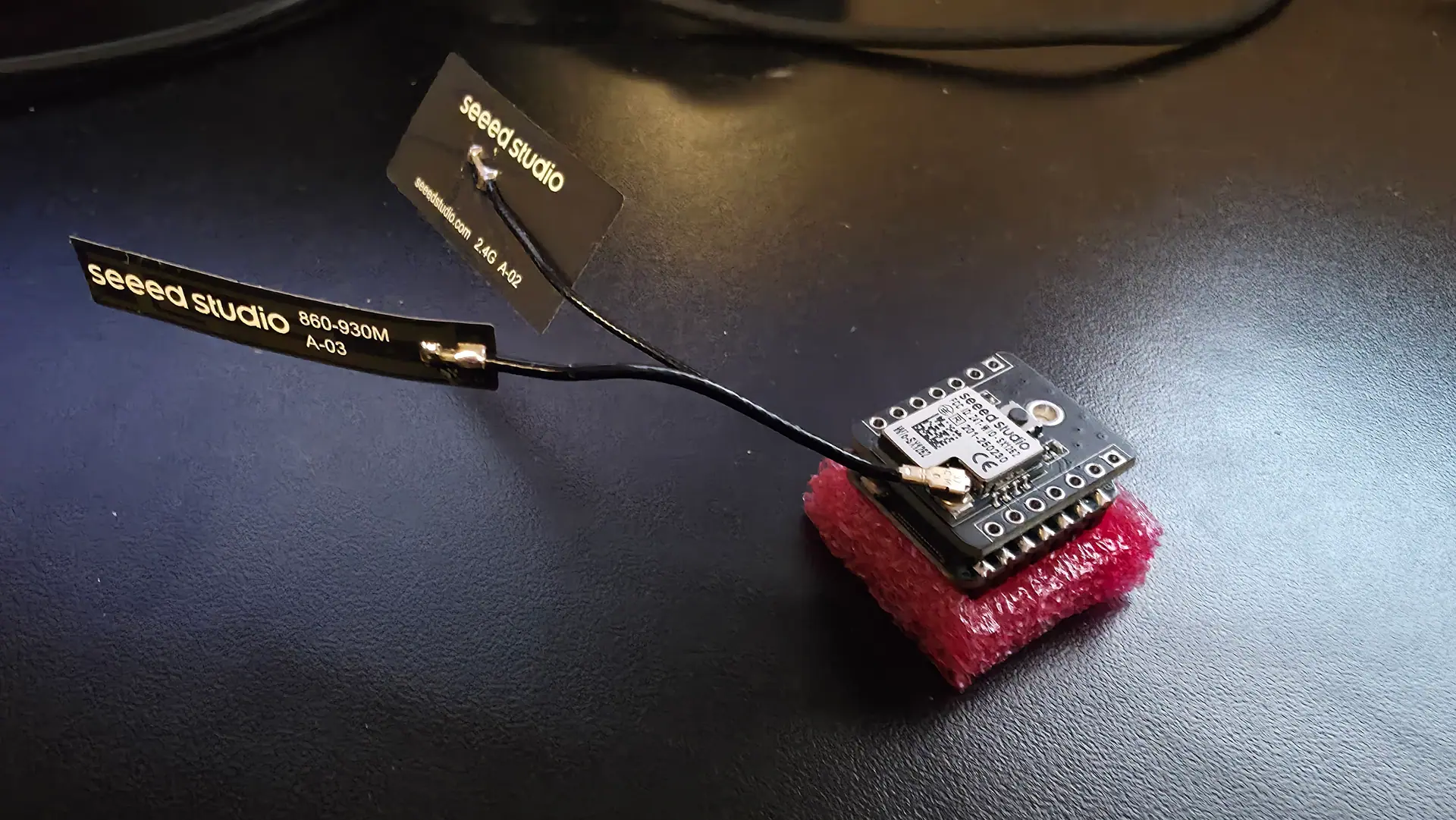
The hub side runs Arduino/RadioLib on an ESP32-S3. RadioLib handles the SX1262 driver and interrupt-based receive. Once a packet arrives and decryption succeeds, the hub:
- Logs the reading to an in-flash CSV (SPIFFS)
- Updates the live WebUI over WiFi
- Checks against configurable alarm thresholds (RMS, crest factor, peak, battery voltage)
WebUI
Accessible at http://lora.local once the hub is connected to the same WiFi network. If WiFi is unavailable at boot, the hub falls back to its own access point (LoRa-Hub-S3) so you can still reach the dashboard on site.
The dashboard shows live acceleration values, RSSI/SNR for each received packet, battery level of the sender, and a rolling log. Thresholds are configurable via the web interface and persist across reboots. The full CSV log can be exported for offline analysis.
Range Testing Results
Tested in Bern, Switzerland, in a mixed urban/suburban environment. Both nodes at +14 dBm, SF9, BW125:
| Distance | Environment | RSSI | SNR | PER |
|---|---|---|---|---|
| 50m | Line of sight | -65 dBm | +12 dB | 0% |
| 150m | 1 concrete wall | -98 dBm | +4 dB | 0% |
| 300m | NLOS urban | -112 dBm | -2 dB | <2% |
| 400m | NLOS urban | -121 dBm | -6 dB | ~8% |
300m+ with <2% PER is reliably achievable in typical deployment scenarios.
Have questions or want a custom LoRa design? Get in touch.
Michael Neumüller
Embedded & hardware engineer · Bern